After a month living in Albania, we share why we chose this overlooked European country—from visa flexibility and affordability to ethical concerns about gentrification. A realistic guide for digital nomads considering the Balkans.
We’ve been in Albania for almost a month. While I’ve written about the move and our initial landing, I haven’t been clear about why Albania—and specifically, this small mountain city where we’re putting down roots.
I was initially coy about our destination, but now we’re here. We’re working to secure an apartment this week. I’ve shared some of our goals: a slower, more affordable, walkable way of life. But what led us to this particular country?
Practical Benefits
Albania affords Americans one year visa-free—a significant benefit. It gives travelers the chance to explore and see what suits them before rushing into residency requirements. For others, leaving the country for three months resets this clock—a maneuver commonly called the “Schengen Shuffle.”
Why Albania Specifically?
Beyond logistics, several factors drew us to this small Mediterranean nation:
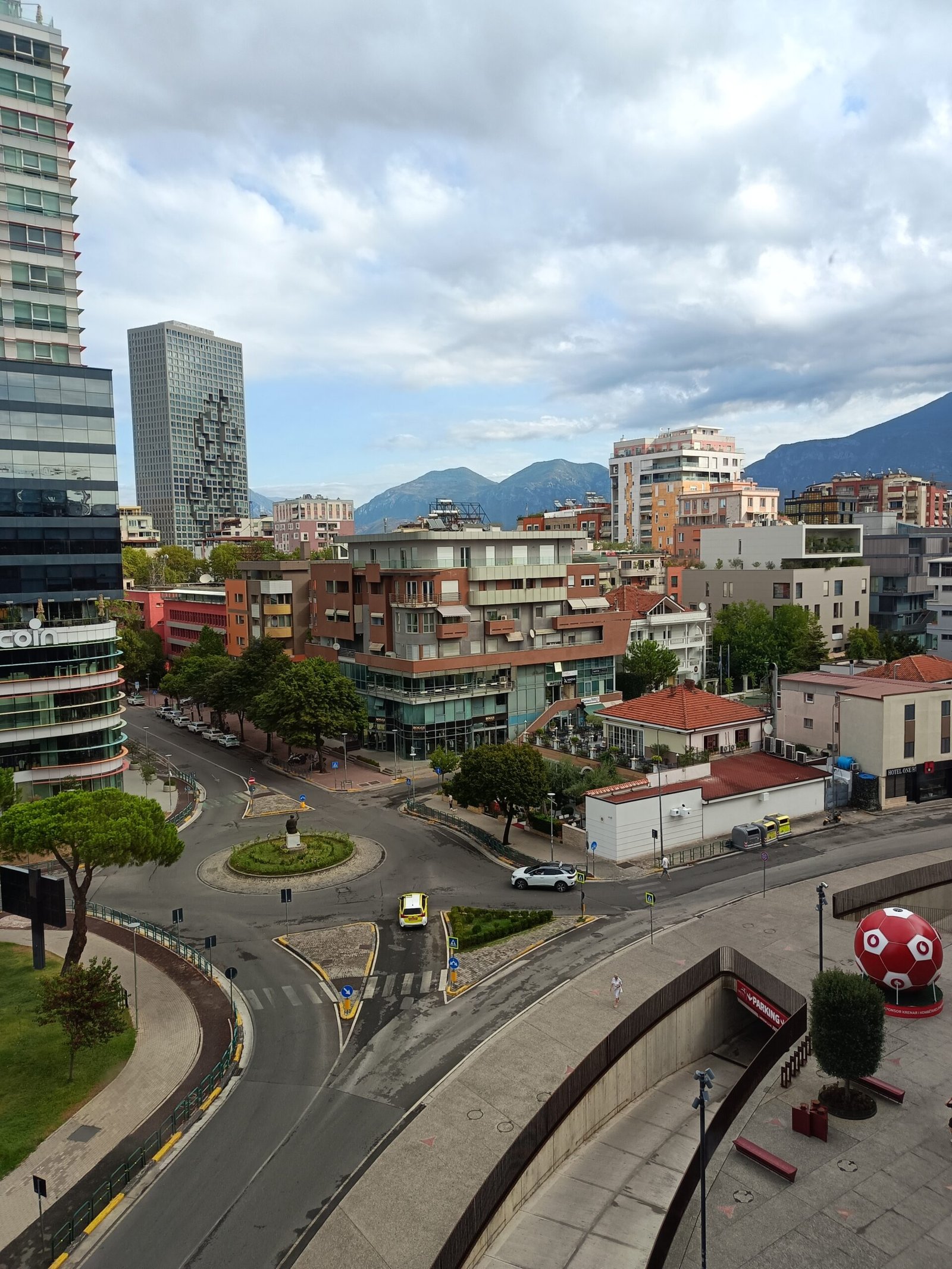
Climate and Geography Albania offers diverse climates and landscapes. Coastal cities like Sarandë or Vlorë attract visitors seeking the Albanian Riviera. Others prefer the vibrant capital, Tiranë, with its clash of modern experimental architecture, older brutalist buildings, and colonial government structures—complete with lively nightlife and excellent restaurants.
Quieter mountain cities like Shkodër or Pogradec offer access to large Balkan lakes. Then there’s Korçë—the wintery cultural hub described as Albania’s “Little Paris,” where the French maintained influence in the early 20th century, leaving their mark on the architecture, tree-lined roadways, and cobblestone alleys. Korçë’s climate is cooler and drier; it snows in winter.
Food Culture The cuisine blends Mediterranean and Balkan flavors—olives, pizza, pasta, grilled and stewed meats, peppers—all fresh, local, and tasting as nature intended. Eating vegetables, fruits, and cheese that taste whole and full of flavor has been revelatory compared to what we’d become accustomed to in the U.S., where food is often optimized for aesthetics and scale over nutrition and taste.
Affordability This was perhaps our biggest draw. We can afford to pause from the rat race, work on creative hobbies, online businesses, and studies without fearing foreclosure, eviction, or living in our cars. Housing, medical care, and food costs in the U.S. have escalated precisely as companies have laid off thousands and contracted hiring.
An Ethical Note
It’s important for anyone considering Albania to know: wages here run $500–$1,000/month. You need to bring the means to support yourself while remaining gentle toward the local economy. This isn’t a place to move with Western wages and then spend four times the local amount on rent or tips—that behavior drastically alters local economies.
We’ve seen this happen in Spain and Portugal, where locals have pushed back against gentrification by foreign investors, Airbnbers, and affluent tourists. As someone who had to leave my home state of California due to these forces, and who watched Austin, TX and Seattle, WA shift under unrestrained tech economies—I support their demands. I’m proud of those in Spain who pushed for rental protections when an 87-year-old faced eviction due to developer pressure. I don’t want that dynamic in Albania.
Living Lightly
I believe it’s important to pay what locals would pay for an apartment. It’s crucial to support small, local cafes and restaurants—not with loud American fanfare and large tips, but with personable, regular service. These cities want business and investment; they’re recovering from a tenuous past when many young people left to send money home.
But we shouldn’t arrive and recreate the situation many older Americans face today—being priced out, unable to afford medication or food. There needs to be balance and regulation. Those traveling must remain sensitive to the impact of their footprint.
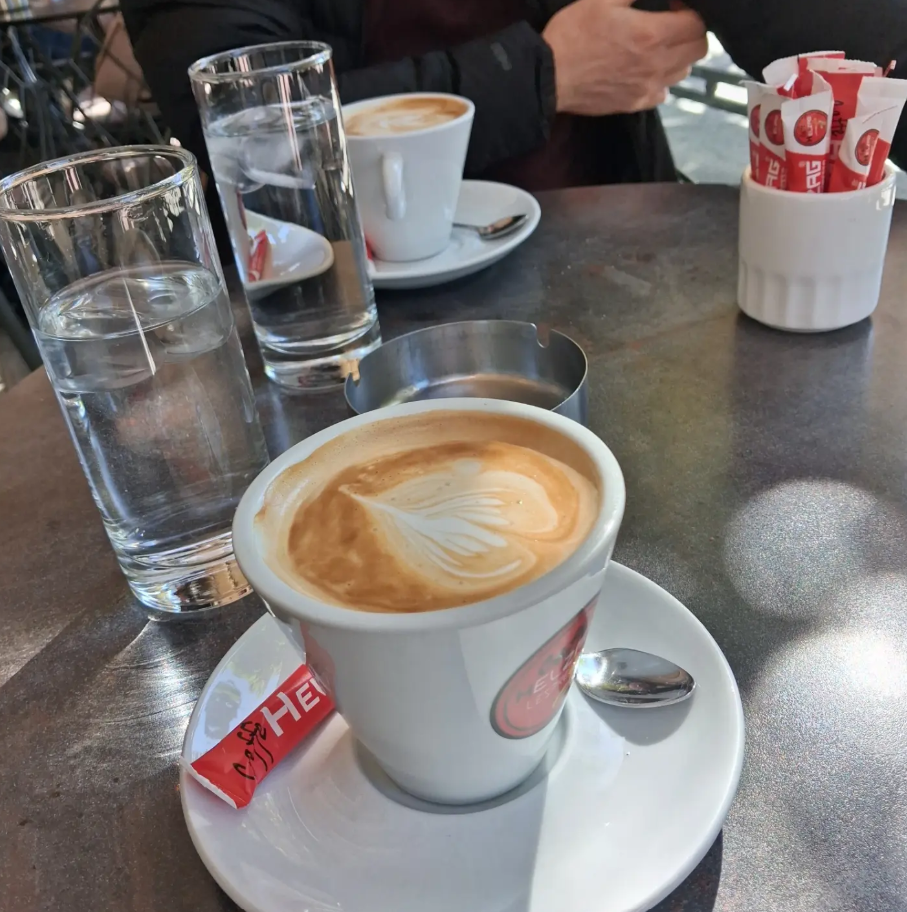
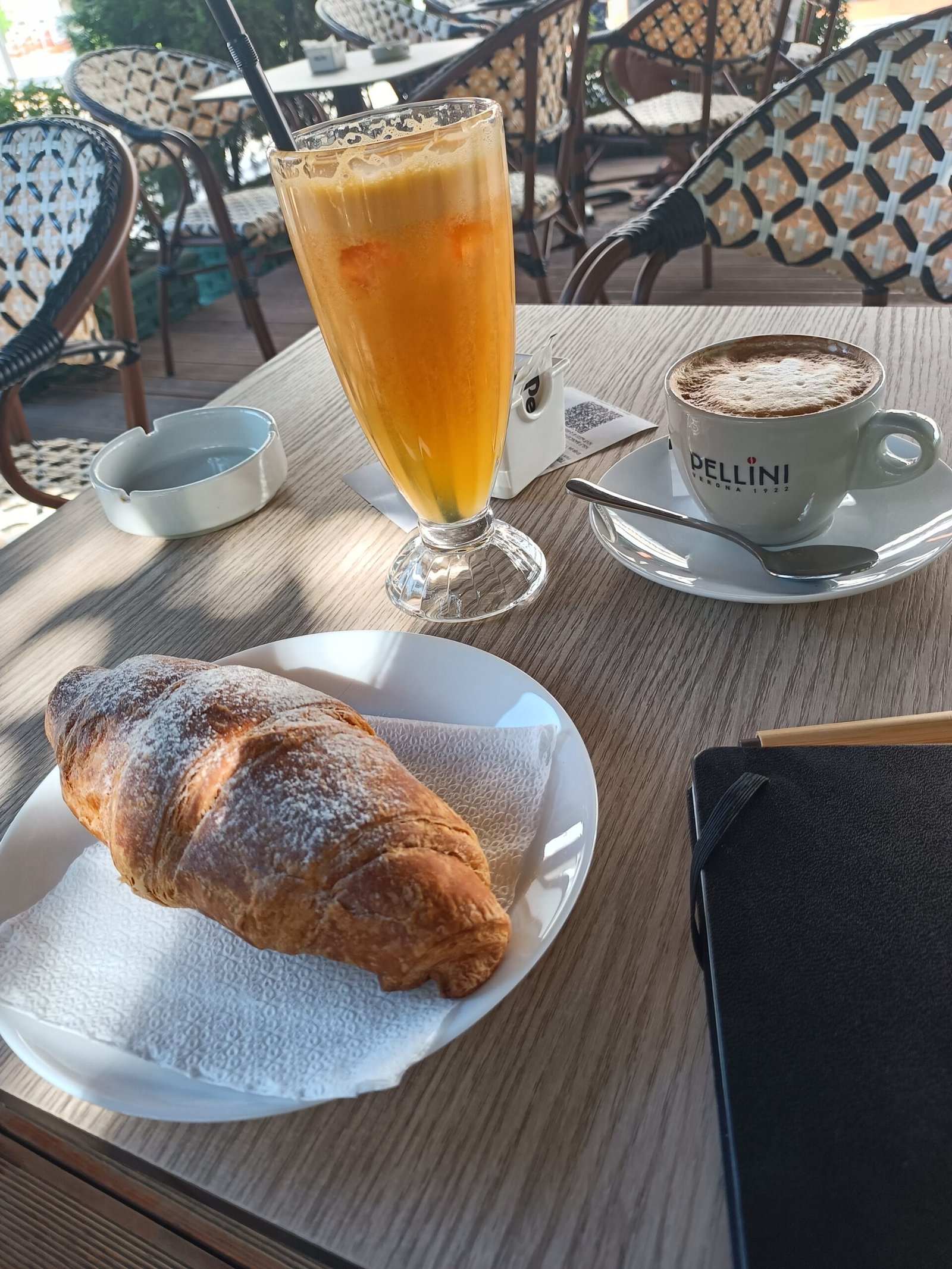
After months of selling household items, shipping two pallets, and storing a dozen boxes with family — we flew overseas with our son, two small dogs, and about a dozen bags. Now we’re in a land where we can step outside our Airbnb and walk a few meters for a morning cappuccino. We’re enjoying produce with flavors as nature intended, purchased for far less, acquired from a mere stroll down the street.
But the road to get here was filled with the unexpected. Our first week, and the flight over, were a true test — and we’re more resilient because of it. I want to share the lessons we’ve learned, the mistakes we made, and the moments that surprised us.
Traveling with Small Pets (Chicago → Frankfurt → Tirane)
Chicago Airport:
If you have a connection through Chicago, find the pet relief station before trekking to your gate. We discovered ours was closer to where we’d disembarked — meaning we’d have to backtrack all the way across the terminal with carry-ons. The relief station is a tiny room with fake grass that I doubt anyone ever disinfects. I’ve smelled better in a music festival port-a-potty. Our dogs were too overwhelmed to use it, so we retraced our steps to the gate and boarded.
Frankfurt Airport:
Frankfurt doesn’t really believe in pet relief stations. You can take your pet outside the terminal, but otherwise they expect you to let them do their business right there in the airport. Pack paper towels and disinfectant wipes. Going outside meant potentially re-entering security — and our USDA certificate was meant for another country, which felt risky. We stayed inside and cleaned up.
Silver Lining:
German airport security love little pets, though. While I was scolded for my disorganized toiletries and my son moving slowly on the baggage belt, the staff were delighted by our little dogs. It was endearing to see humanity shine through the brusque veneer of diligence.
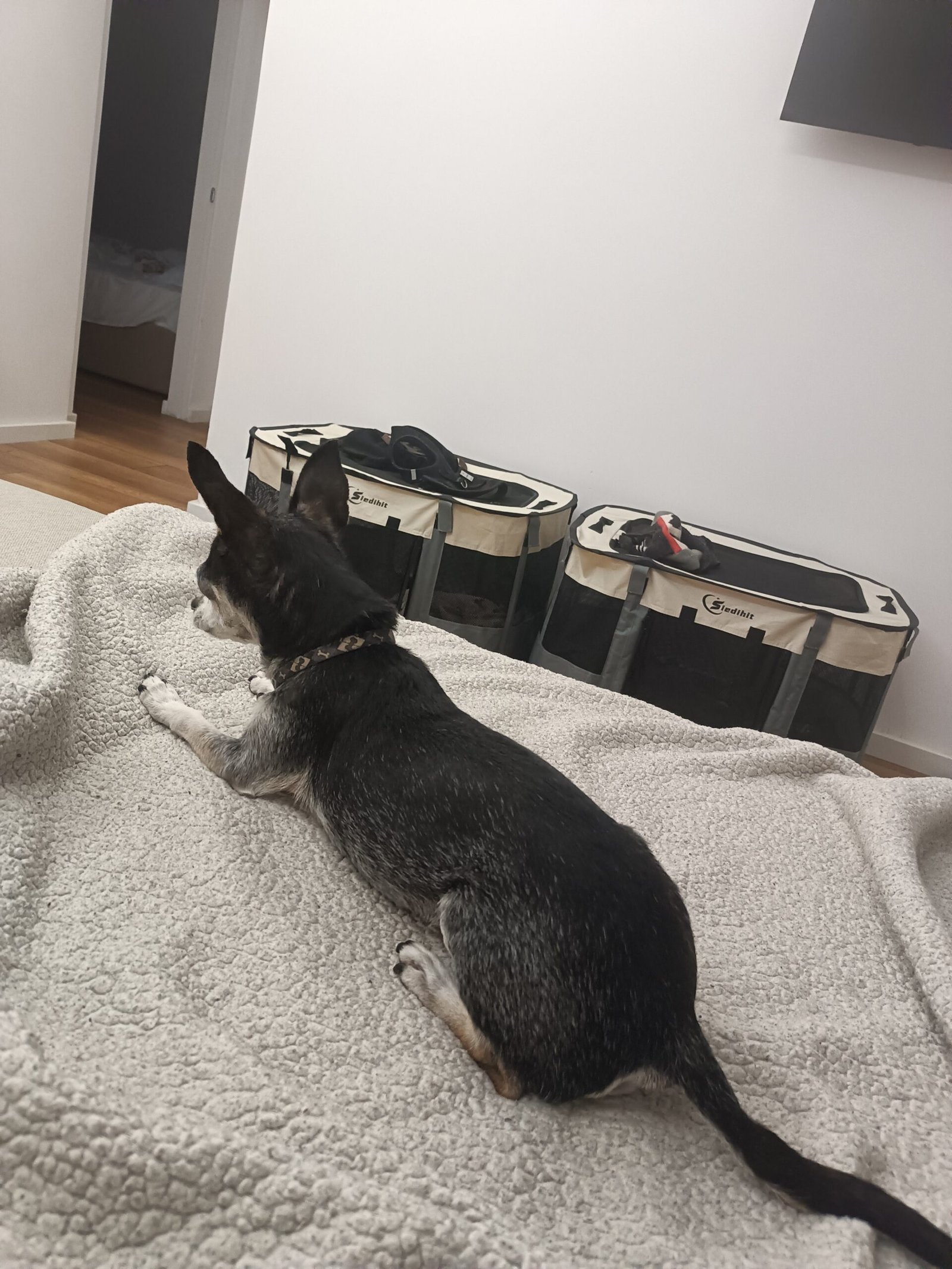
One of our little poochies – and our collapsible doggie crates
Security Surprises & Toiletry Tales
TSA in the States was typical — no issues. But German airport security clearly understands that US screening is more relaxed. Layover passengers go through security again.
I also didn’t know several toiletry rules TSA didn’t enforce, but German security did: – Pack any slightly large toiletry in checked luggage. Even a nearly empty toothpaste tube – if the bottle is technically over-sized, they’ll toss it. – Use clear plastic bags for toiletries, not opaque ones. Nice black toiletry bags I’d collected over a generation? They weren’t happy with these.
And then we went through security twice. Our gate for a 7-hour layover changed without warning. Monitors only showed boarding flights within the next hour; no email notification reached me because I hadn’t signed up for a certain alert type. Their app also refused to cooperate.
Tip: As soon as you land, check with an airline representative about gate changes. At Frankfurt, a changed gate can mean a journey to a far-off corner of the enormous airport — where they’ll make you go through security again.
Landing in Tirane After Midnight
Arriving near midnight was overwhelming: crowded, noisy, warm, and humid. We saw many groups of foreign college students there for an affordable getaway. Exiting was easy, but if you have many suitcases, note that luggage carts require local Lek coins. You can only purchase Lek inside Albania, so head to the exchange office in baggage claim — minimum exchange is $10, and rates weren’t as good as outside (we were told).
The exchange office outside baggage claim however was closed, and we could find no ATM machines, inside or outside.
We also couldn’t access data roaming on our Tello plan (promotional free European roaming) because we didn’t realize we needed to log into the website for our numbers and enable it. Therefore we had no way to reach our taxi driver. So we grabbed wifi at an airport cafe, met our driver, and our Tirane adventure officially began.
Hotels vs. Airbnbs: What Actually Worked
I had points for a nice hotel in Central Tirane — perfect for a soft, uncomplicated landing. However, a room confirmed for three people doesn’t guarantee three beds. Ours came with a king and a non-sofa-bed couch. We called and requested a roll-in bed, which worked nicely.
Before you get your room key – ask to review the reservation and confirm if everyone will have an appropriate bed, or whatever amenities you were expecting.
Airbnb recommendations: Ensure your host:
Is local with a local phone number that the cab driver can use to help locate the places (crucial in Albania where addresses aren’t standard)
Provides a video showing how to find and access the building and unit
Includes a check-in code with confirmation
Is responsive to messages
If they provide none of these, those are big red flags. Our first Airbnb ghosted us, leaving us stranded. Our taxi driver Ervin (who also organizes tours) became our savior, navigating Tirane’s narrow streets filled with double-parked cars like a Star Wars TIE fighter. He advocated for us assertively, rescued us, and took us under his wing far more than most American cab drivers ever would. We were happy to book further trips with his company.
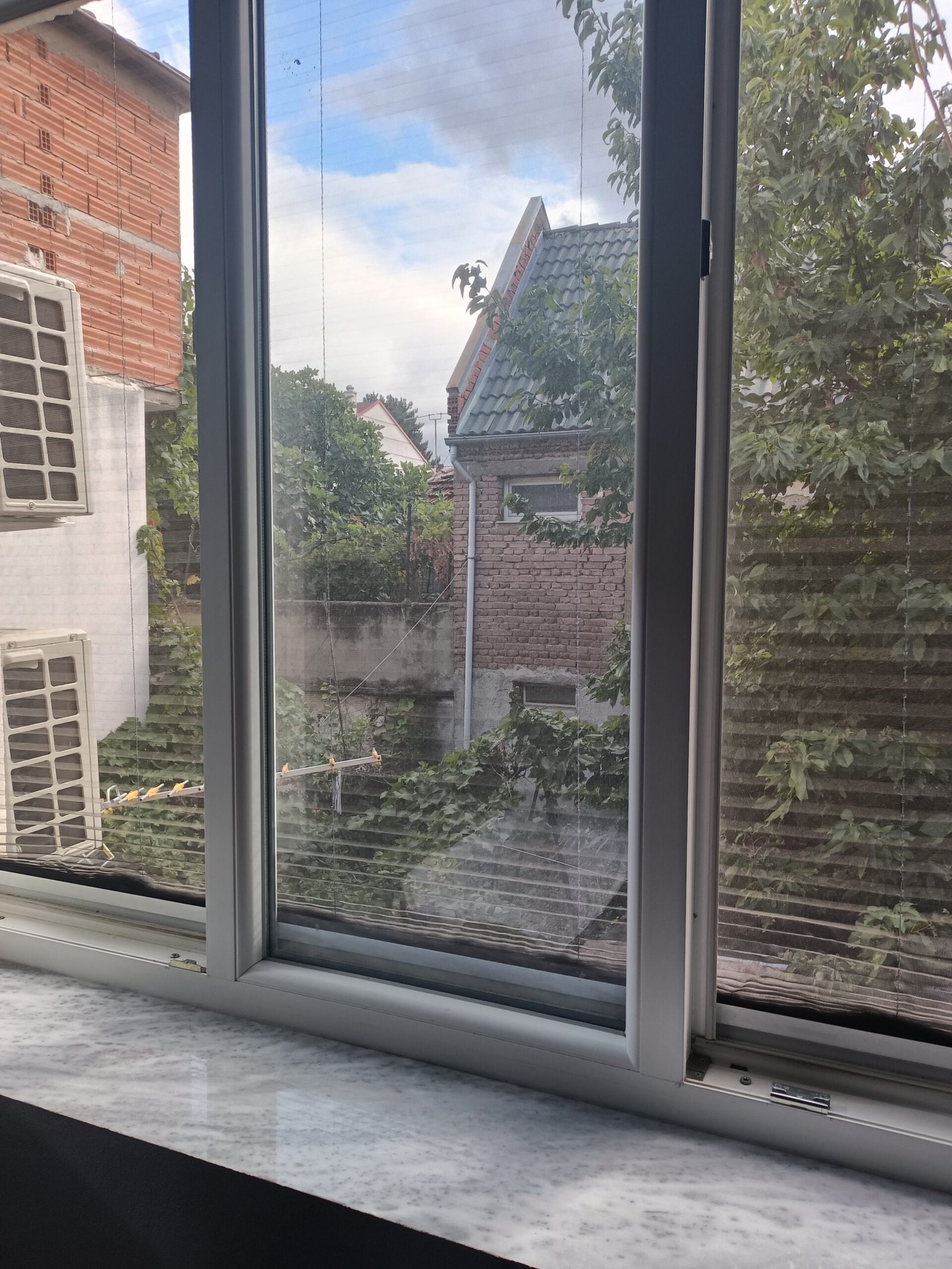
View from the hotel we first landed in, in Central Tirane.
Money, ATMs & Cash Culture
Many hotels, upscale restaurants, and grocery stores accept credit cards, but most smaller shops, eateries, produce markets, and bodegas are cash only.
– Try ATMs outside established banks only – Never insert your card — machines could eat it, and replacing one from abroad is difficult – Tap-to-pay symbols indicate working machines, but many don’t activate this feature. I tried 3-4 ATMs before finding one with a lit-up tap symbol. Relief was short-lived — it was out of cash on a Sunday night. – Always decline conversion. Your bank handles it; you won’t pay additional fees. Sometimes the request pops up twice — decline both times. – Use cards like Charles Schwab or Fidelity that reverse ATM fees.
Tipping Across Borders
In hotels, tip bellhops and housekeepers who help you. We were travel-shattered our first night and missed this and felt bad afterward. But in the following days they were happy with our small shows of gratitude. They may refuse at first, but really appreciate it. It doesn’t have to be much. 50 lek, 100 lek. Maybe 500 lek at the end a 4 day stay for housekeeping.
Tipping isn’t expected in Albania, but appreciated, just not at US levels. Ten percent is fine; over-tipping makes it harder for locals.
Nothing like having an outdoor cafe literally outside one’s Airbnb apartment.
Language & Local Connections
Learn courtesy words: thank you, please, greetings, excuse me, do you speak English. It shows respect. If you can, try to learn how to order in cafes or shops. Not everyone speaks English, and this smooths transactions.
Find local expat meetups on social media. Visiting with mixed groups helps you decompress in your own language while learning history and adjustment advice.
Keep credit card receipts organized in envelopes by category: lodging, transportation, groceries, restaurants. You might not understand the receipt wording, and statements convert currencies differently. Write brief notes on the back (“phone plan,” “cab ride,” “haircut”) — sometimes the shop name isn’t clear, especially with small businesses.
Welcome to Village Life
Embrace surprise encounters with locals. Albanians are friendly, family-oriented people who love children and cute little dogs. They truly believe it takes a village. Strangers may have a brusque exterior, but underneath are incredibly warm hearts.
I’ve had strangers let their unleashed dogs jog up to greet mine, then literally scoop my chihuahua up to admire them. In America we are taught to have reserve regarding personal space and especially other people’s dogs – so this was learning curve – but their genuine affection is contagious.
When I was buying large water bottles with my college-aged son, an Albanian grandpa playfully stepped in, admonishing him in Albanian with what I assume was “help your poor mother out and carry these big bottles.” He gestured that carrying them would make my son big and strong. Everyone laughed warm heartedly, including myself.
Welcome these moments. Go with the flow. These are the building blocks for connecting with your new community.
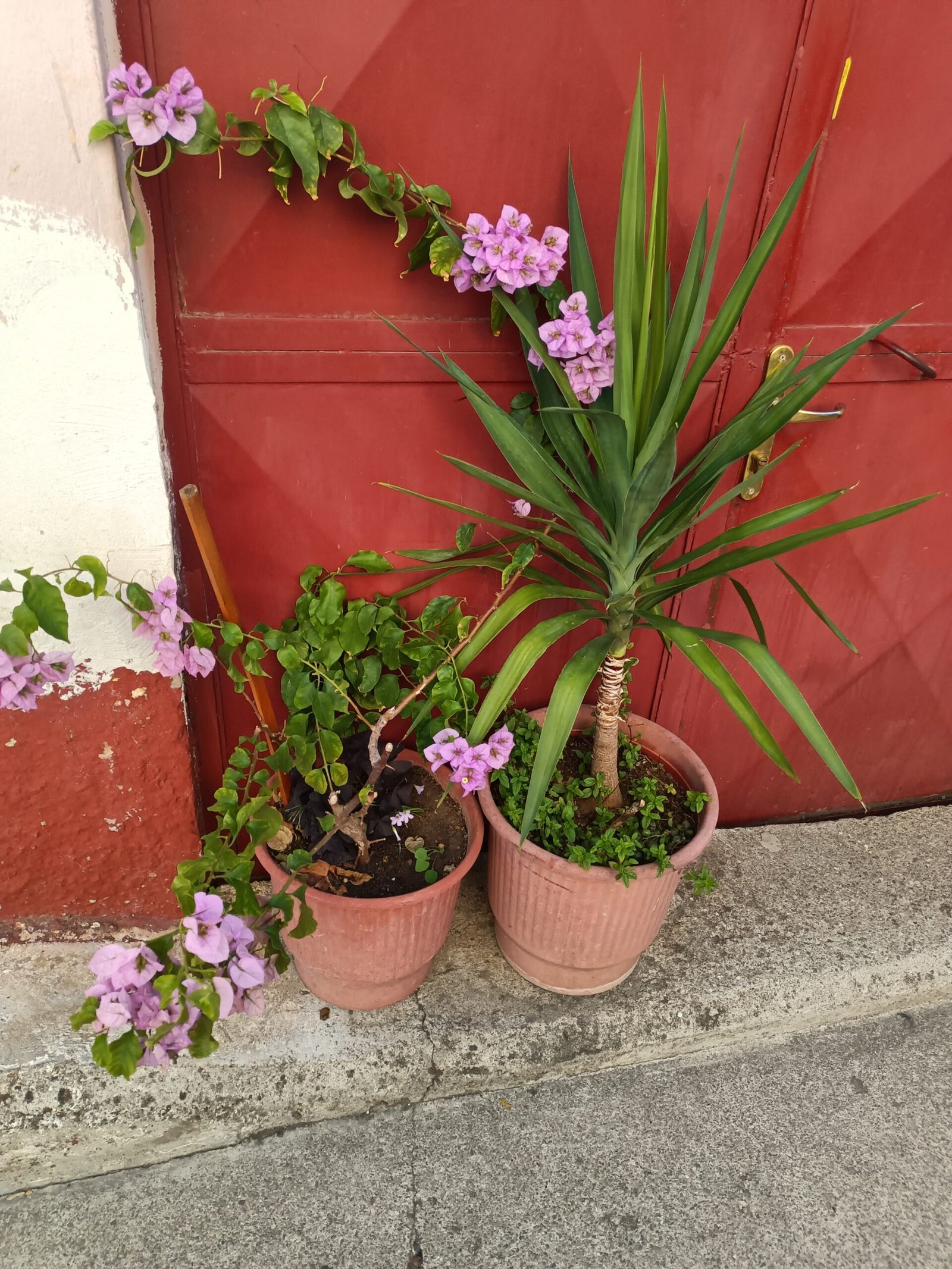
Narrow streets with flowers
What Resilience Looks Like
Week one tested us: airport chaos, gate changes, and stranded moments. But we also found hospitality, humor, and unexpected kindness. We’re excited to be here. Still figuring it out. Somehow, already feeling at home.
I’ve been trying to read more books from 2013 and earlier lately. One such book is Jaron Lanier’s prescient Who Owns the Future? It’s bittersweet read as no one learned the lessons he was trying to convey. This article gives a good summary. We all really need to be fairly compensated for the data (and value) we provide to the technocratic oligarchs. That said, I’ve been trying to read these earlier works lately for another reason: the writing doesn’t sound like AI.
I’ve been discouraged reading online writing lately because for everything to be grammatically smooth and structured for SEO, writers have been leaning heavily on AI. I myself have used it as a grammatical check and for optimization. I try hard to retain my own voice, structure, and patterns – but how much is also influenced by what I read? When I start seeing the tale tell ‘Not x – it’s y’ I want to stop reading someone’s piece. Or I at least give it a side-eye. But right here – I’m using some contemporary structuring myself. How inevitable is this? It distresses me from a cultural and cognitive standpoint.
When I start reading a book from 13 years ago – or one from my college days in the early 90’s, like say: Data Trash – The Theory of Virtual Class – by Krocker and Weinstein, books that I needed to read while drinking a double cappuccino and listening to ambient industrial on my CD walkman. Why? Because the sentences were long, they were obtuse, they required deep focus. But once you got there you were in a different world. One without several different tabs, a dozen ads, or the temptation of a video reel. One’s brain felt different – I miss that. But more importantly: my writing back then was different. Perhaps to some it was not as accessible – but there were deep trains of thought in theoretical writing that I rarely encounter online. Perhaps this piece will train the algorithm to find them for me.
Another example is when I read some of my father’s philosophy books – like Camus & Sartre by Aronson. Like stepping into an old art house theatre with worn out seats to watch a European new wave film – even writing from 20-30 years ago about a subject from more than 50 years ago, feels rich, foreign, and otherworldly compared to our current day. Reading this earlier writing is like putting on strange lenses – you must adjust your perspective, your processing, your focus. It’s not so much as a different language as the feeling when you put on a pair of very old shoes. Your feet no longer fit because they’ve been adapting differently for so long. The calluses are different, your bones have aligned differently.
I’m honestly quite worn out and turned off by the style of written communication right now. When I spot the troupes, styles and patterns of AI I immediately lose trust in the author. But when I see these patterns in my own writing I am disgusted and worry how much has the internet and human minds as a whole been contaminated by this singular voice with its unreliable data?
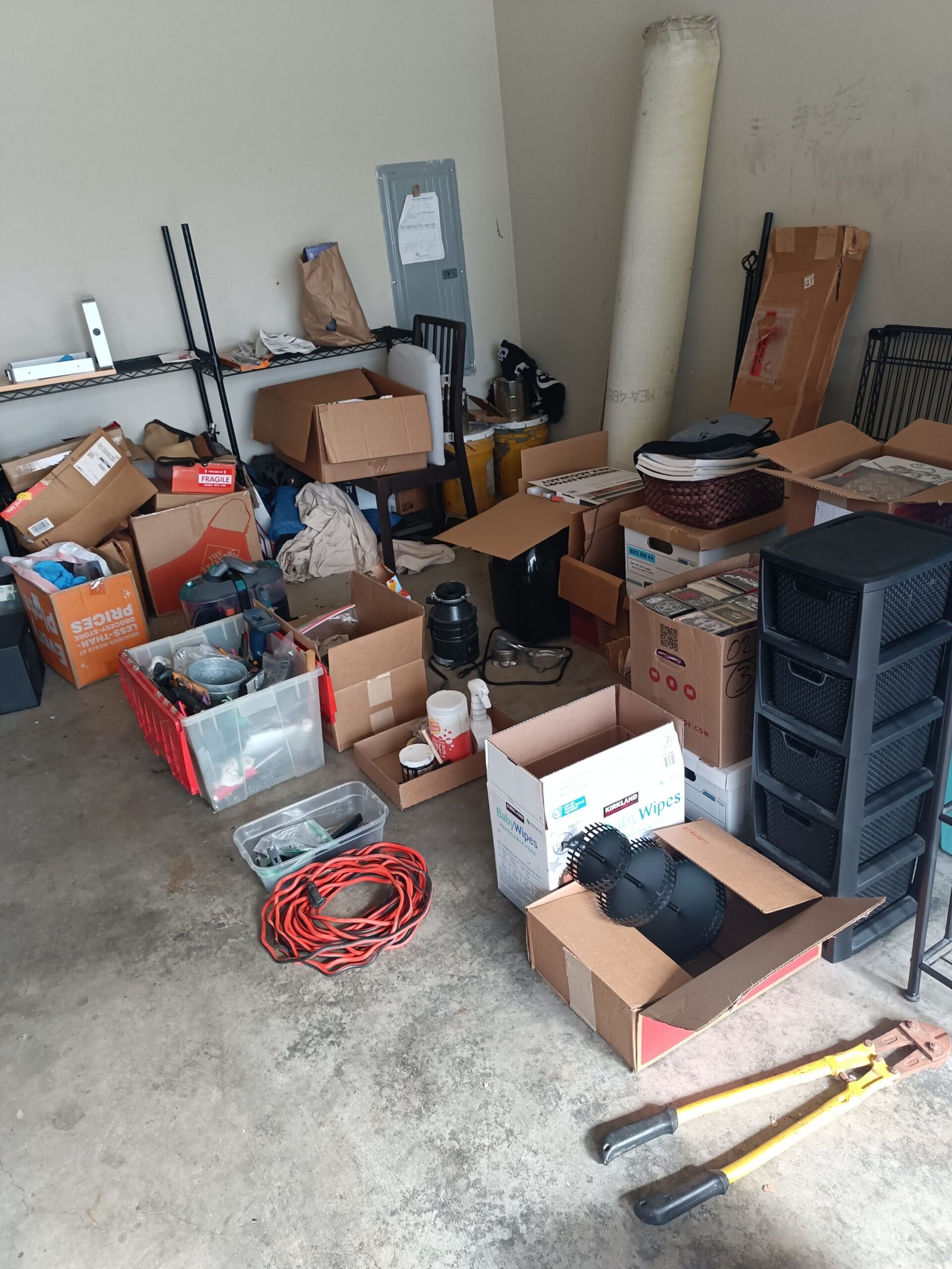
Today was our last attempted Costco run—we’ll be leaving for a European country with no Costco in a couple months, and within weeks we’ll sell nearly everything to stay briefly with family.
I went for peanut butter, soymilk, yogurt, and sausages. At the door, I was warned my membership had expired and would automatically renew at checkout. I politely declined, noting we’d soon be abroad with no plans to renew. The door person asked, surprised, “Oh, does the country not have a Costco?” I confirmed. No. Out of habit, I even apologized, which seemed misplaced. I’m sorry our new country will not have a Costco?
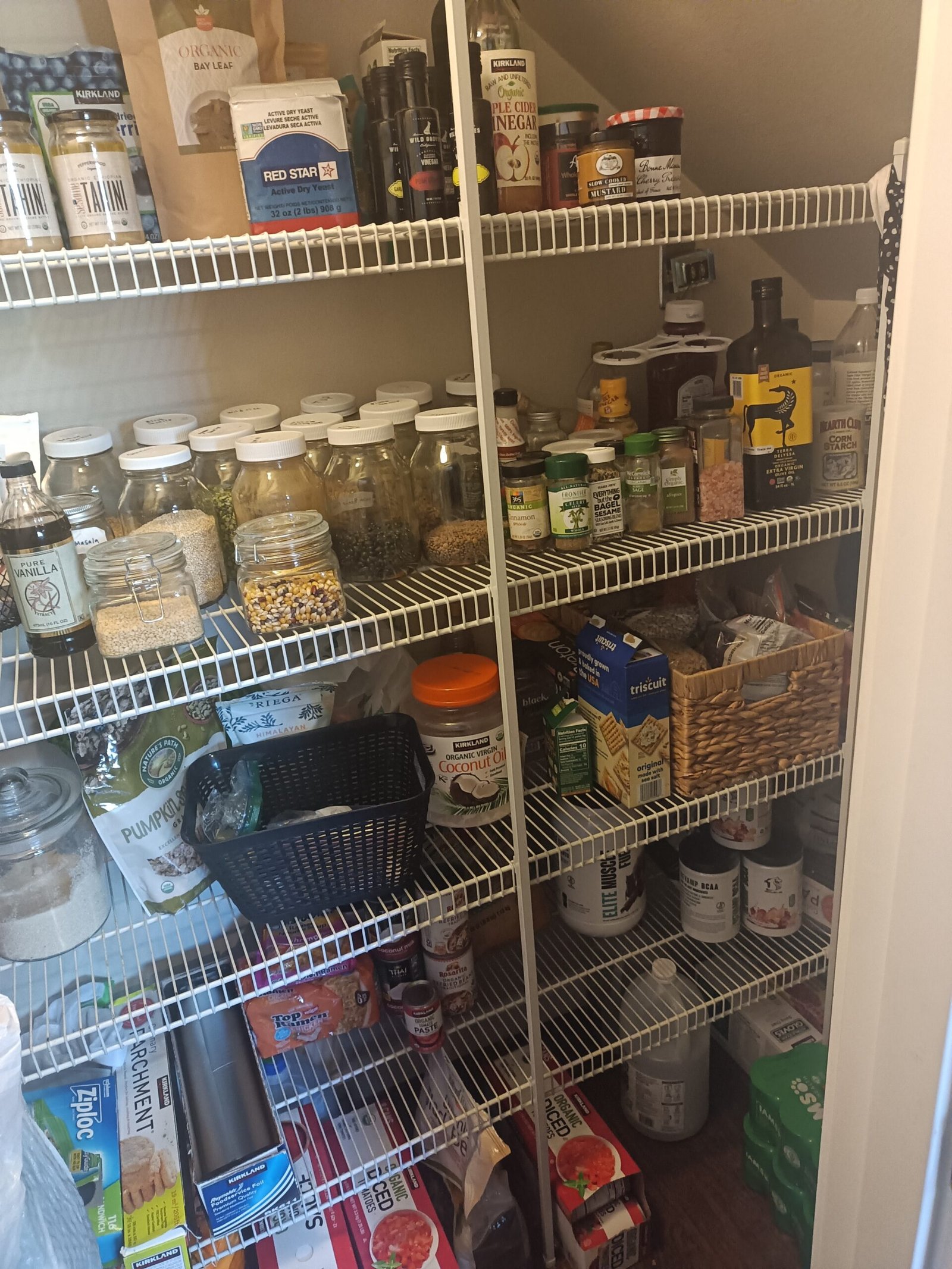
For now, it’s probably for the best—spending $200 on items we’d likely give away or cram into an already packed car for our cross-state trip wouldn’t make sense. I already want to bring our pantry staples: beans, lentils, and the Instant Pot. (Don’t get me started on the spice blends I want to take overseas).
So yes, it’s bittersweet. Costco sustained us through many layoffs, recessions, and winter storms. We accumulated cases of tomato products, bags of beans, lentils, and rice; large spice containers; boxes of soy milk; oversized bottles of hot sauce, olive oil, juice; giant bags of nuts and granola. For decades, Costco anchored our frugal American lifestyle. I learned to cook soups, stews, chilis, bean dishes, and more, out of my pantry.
But moving to a small European town will change all this in ways that weren’t possible in the US. In Europe, towns will be walkable, lined with fresh produce markets on every street corner. Homes will be small, lacking storage space. We may not own a car at all. I’m looking forward to walking daily to bakeries for bread, stopping at cheese shops, visiting a butcher. I’m excited to embrace a different pace, a smaller scale. But another part of me will likely still find myself storing containers of beans, rice, or potatoes—habits born from lean times.
Notes:
Support this work – I share additional writing, behind-the-scenes notes, and works-in-progress on Patreon.
MA Thesis on Butoh – I self-published my thesis exploring performance, embodiment, and cultural history. Available here.
One-time support – If you’d like to contribute directly, a $3 tip via Ko-fi is always appreciated.
Why Taxonomy Is More Than Structure: Building Digital Community Spaces
I recently had the pleasure of designing a hierarchical taxonomy on a local Discord server for the pagan community of a small Pacific Northwest city. Collaborating with subject matter experts—tech designers, former software project managers, and community organizers—the project became a rewarding blend of technical rigor and culturally-informed design.
Trees at Tacoma’s Point Defiance Park
Starting With Purpose: The Kickoff Meeting
It began with a kickoff meeting to define the scope and purpose of the server. Before touching any channels, we needed clarity on intent: What questions would this server answer? Who were we serving? What engagement patterns mattered most? These questions helped shape the functional architecture of the community. We assessed what kinds of content categories would support these goals—what functionality was needed and what subject channels would be required to deliver on them.
Academic Training and Cultural Context
My formal education in religion, anthropology, and folklore shaped how I approached cultural nuance, shared vernacular, and inclusive categorization. I studied religions, anthropology, and folklore—especially pertaining to Europe and Asia. Before that, I grew up in the SF Bay Area and came of age playing table top RPGs like D&D with the children of 60’s era founders of many local neo-pagan paths as well as organizations like the Society for Creative Anachronism. Through these friendships as well as my own reading, thanks to growing up in Berkeley, supplemented with marvelous bookstores like Shambhala Books and Moe’s Books – I gained an education in pre-Christian and non-Western religions, mysticism, and mythologies. This foundation informed every layer of the taxonomy design.
Learning From Existing Communities
I started with conducting a comparative analysis of other similar servers from overlapping communities. I examined their functional hierarchy, their core administrative and technical categories and channels—from Announcements, Event directories, to FAQs. I knew that we needed channels for Event planning as well as spaces for people to have discussions about many different groups of traditions and crafts. We also needed an off-topic area for people to share pet photos, memes, or to talk about non-spiritual hobbies. Comparative analysis showed me what worked elsewhere and what didn’t; structures like these exist for reasons.
Terminology as a Negotiation
In a shared spreadsheet I developed my recommendations which I ran past top SMEs for review of terminology. Once I gathered their preferred candidate terms I reviewed all against core Taxonomy standards and delivered recommendations to the broader group to discuss and vote on. The spreadsheet became a site of discussion where we tested terms against standards, gathered SME preferences, and voted on final candidates.
Navigating Scope and Ownership Concerns
The review session diverged into a discussion of the need to develop moderation and rules, which was deferred to a later content development stage. However, it was the critique of the scope, purpose, and ownership of the overall project that threatened to derail the timeline or cost us members. Thankfully, the project manager adeptly smoothed concerns, and compromises were agreed upon. A clearly delineated schedule was developed for review of the taxonomy, implementation, and then delivery of a prototype.
The Prototype and Its Reception
After a week of further taxonomy analysis, restructuring, and polishing of terminology, I implemented the prototype with additional engineering assistance for internal testing and feedback. Reception overall was enthusiastic and positive.
What Classification Reveals About Community
Working with varied subject matter experts—it was an enjoyable blend of technical expertise and creative content. What struck me most was how classification, often seen as dry or mechanical, became a vessel for connection, identity, and shared meaning in this shared digital commons.
With 15+ years of experience leading data strategy at companies like EA and AMD, I help organizations structure their digital world. From building AI-ready taxonomies to managing complex DAM migrations, I turn chaotic information into clear, findable insights.
Whether you are a startup needing a foundation or an enterprise looking to optimize your search, let’s talk.
Packing, planning, and prepping – but not ready for the big reveal.
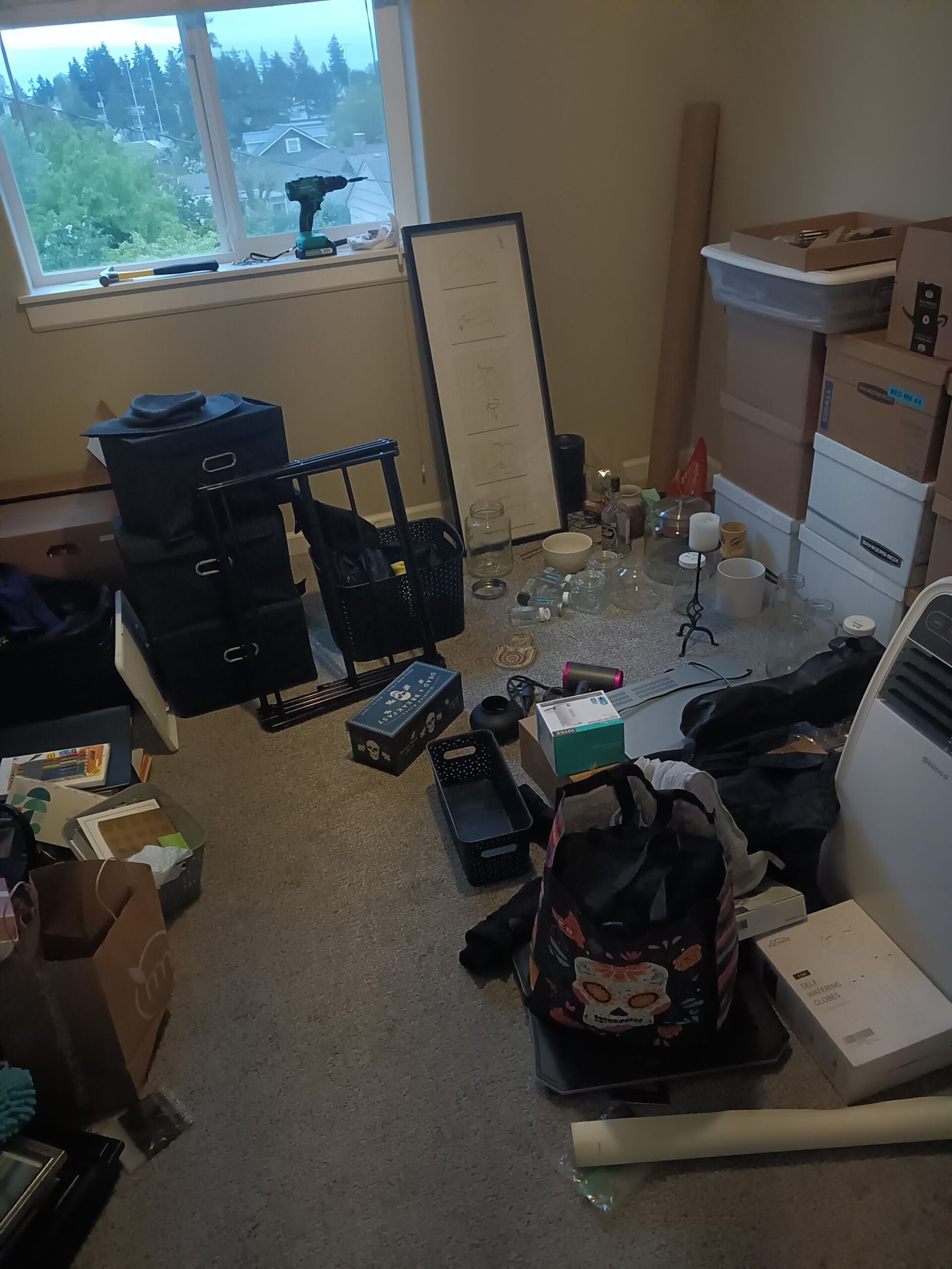
Took a breather from writing for a couple months. The world and my bandwidth experienced some tumult, to say the least. The US went to war with Iran, we helped a family member move out of state, and our own preparations for our international move shifted from the conceptual to the daily grind of a merciless to-do list. I did not have the spoons for reflective writing – at least not anything public.
I’ve been buried under the slow moving, flakey world of Facebook Marketplace, the piles of digital bureaucracy of all things financial, legal, and administrative that comes with such a move, and the demanding march of getting our house ready for sale and ourselves overseas. It’s easy to lose yourself in spreadsheets when the bigger picture feels uncertain.
I’m not ready to announce where we are headed. I’m trying to thread the needle between safety, privacy, and superstition. It’s also TBD what direction my writing will take for this chapter. Many people are seeking others detailing checklists, budgetary guidelines – and I’ve definitely been a consumer of that kind of travel writing.
Balancing the audience’s hunger for roadmaps with my desire to stay true to a more reflective, culturally observant style, and navigating the boundaries of transparency, remains to be seen. I’ve been following a number of YouTube channels and Instagram profiles, and many approach these same questions in different ways.
I expect my style to evolve – there is no point in being prescriptive. It is also not in my nature to duplicate others’ efforts.
What’s on the Table
What I can reveal is that we’re a family of three, traveling with a young adult child. I will address observations for that demographic broadly, without personal transparency. We will also be traveling with two small dogs. We will likely be traveling out in the summer and spend a couple months exploring different cities in the country we are interested in, until we find one we’d like to establish a residency in. We are hoping for an affordable, walkable town with arts, culture, museums, theatres, outdoor eateries, and nature. It would be wonderful if we found opportunities for my spouse to DJ post-punk/80’s underground for any local venues. In the meantime his darkwave/postpunk playlists are available on MixCloud.
I hope to find a good homebase for exploring the rest of Europe while diving deep into the local arts scene—both of which I plan to write about.
Stay tuned!
Notes:
💚 Shop Independent:All book links in this post go to Bookshop.org. Your purchase supports local bookstores and helps fund this writing. (Affiliate links used).
💡 Support this work – I share additional writing, behind-the-scenes notes, and works-in-progress on Patreon.
📖 MA Thesis on Butoh – I self-published my thesis exploring performance, embodiment, and cultural history. Available here.
☕ One-time support – If you’d like to contribute directly, a $3 tip via Ko-fi is always appreciated.
A Personal Walk Through the Vanishing Urban Culture of Berkeley.
Something I miss about living in Berkeley before the late ’90s was that you could leave your home and walk and enter into an energetic, economic ecosystem. Every day was ripe with surprises, possibilities, and interconnections. You would go into a cafe and just see what the day (or night) would bring. You would walk down the street and just see what the season would bring to trees, to the air, to flowers. Everyday was different and magical – and everyone participated. There was a wavelength to tune into. People shared their energy, their discoveries and imaginings…and it was free. It reminded me of the Red Hot Chili Peppers song from the ’90s with the chorus “Give it away, give it away, give it away now.” Regardless of your feelings about the band, they captured something unique to this time – before the monetized internet and late stage capitalism hoarded everything behind computer screens and corporate big box retail.
Prior to this shift in the ’00s you could walk down a street and the air would just be alive with the smells of incense, coffee roasting, garlic and onions, BBQ…..the sounds of music coming out of shops and cars – reggae, punk, R&B. It felt like surfing – riding each day’s energy, stopping in a cafe, record store, or bookstore to see what new things had come in – like treasures washing up on shore. I would make friends with shop owners and they would know what I was interested in. We would talk about music or writers, they would turn me on to new things, and I would gift them with my interest and enthusiasm. It was an energetic economy – even if I couldn’t purchase a book or record that day, the passionate conversation was payment enough. You could be hungry then and still live off these exchanges.
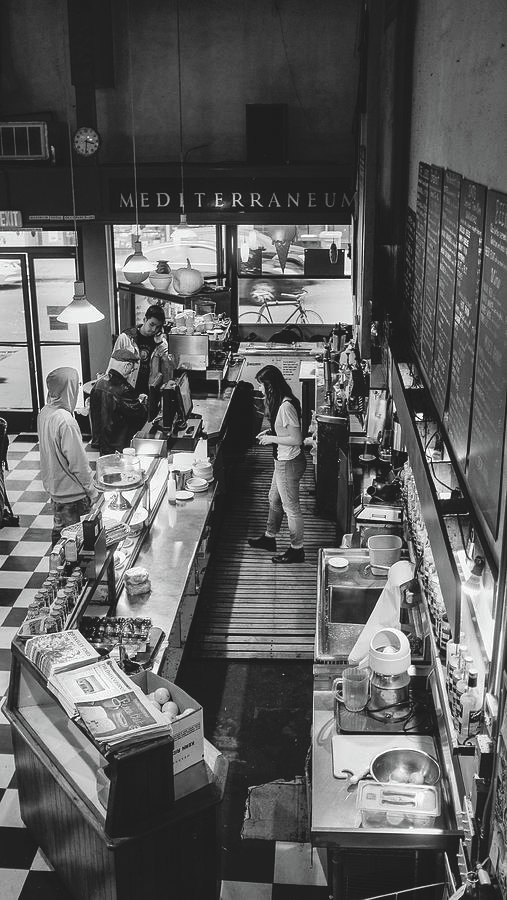
Caffe Meditteraneum – by Jeanie Whelen
Berkeley was vibrant yet small – people often knew me through different work places or through different family members, or school. This kept people in check, for the most part. I had worked in numerous cafes across town as well as record stores. It felt like small but also worldly, limitless. You could get music, books, or food from all over the globe. It felt relatively safe because of a shared local history and certain East Bay code of honor. There was also freedom because it was an anti-authoritarian town – but if you screwed people over, word would get around.
But something happened when everything was replaced by online billionaires buying everything up, monopolizing the internet, retail, and the media. In partnership with a gradual take over of the political sphere they narrowed the world and separated everyone from each other. Rents and home prices rose to inhumane levels, local businesses closed down, jobs went away. Generations scattered to more affordable shores. Everyone became fractured and divided…closed off. The energy went into hiding. It survives now mostly in the trees, wild neighborhood gardens, and old houses. This is why it’s so important to preserve these spaces – green and architectural – because they’re the last places to still hold these transactions…free of charge.
It’s difficult to leverage technical tools when everything lays on shifting sands owned by billionaires donating money to fascists.
When I was working for corporate America a year ago, in the years preceding, there was an enormous push for everyone to start using our enterprise AI tool to sharpen our writing, to strengthen and standardize our reports and documentation. The goal was to ease everyone’s workload with copy that was easier to digest, more compelling, more engaging. In simultaneous efforts to increase metrics and reduce headcount, everyone jumped on board to increase productivity. In time this sowed doubt in everyone natural ability. Should everything be run through these tools to ensure the right polish, the right “oomph”? While everyone was trying to deliver their “best” they were actually undermining their own abilities and proving themselves replaceable.
This has been happening across the country, and it’s creating the most turmoil in hiring processes. Companies use AI to screen resumes (often with inaccurate results), they even use AI to conduct screening interviews. But they are increasingly using tools to detect the use of AI by applicants and then use that to discredit them. It’s a cost-saving strategy when hiring departments use it – but represents a power imbalance when others are disqualified for doing the same. Throughout the industry there are no clear guidelines, expectations, or guardrails.
Worse still, readers have caught on to the tell tale sign of AI use in copy. Beyond the famous em-dash (which precedes AI and punishes legitimate authors who use it properly), there are certain common conventions and a certain cadence that reveals popular tool use. There are also a number of new tools available (for subscription of course) that promise to detect AI writing. Many are now reverting to analogue tools and processes as they struggle to adapt to this competitive and fickle environment. Will this result in writing output that is slower and clunkier in order to prove authenticity? Will this negatively impact “productivity metrics”? Or will only those who are disenfranchised economically be held to the analogue standard? It’s a chaotic time in many ways these days; this is just one more log on the dumpster fire.
But let’s return to two large elephants in the room, one that I touched on in the beginning. One: there’s currently a boycott brewing of ChatGPT for the massive donations OpenAI’s co-president has sent to Trump. Two: the disastrous impact that GenAI data centers have had on local water and energy resources.
I don’t have an easy conclusion or neat and tidy next steps. If I ran this piece through GenAI for optimization and restructuring it might come back with something pithy and punchy – but it also could flatten my overall voice and derail my intentions. These paragraphs could also end up sounding like the dozens we see regularly on LinkedIn.
These impacts were never my intention when I wanted to leverage these tools to just refine awkward transitions or clunky passages. Even with the best of prompts there’s a tendency for GenAI to dilute the voice and agency of authors. These tools can also be beguiling, flattering, and so incredibly helpful – which is dangerously attractive to writers dealing with critical, unsupportive employers or readers. But the trade-off is the weakening of one’s own instincts, creative judgement, and voice – and in this current environment that could be intellectually and culturally disastrous.
—–
Notes:
If this piece resonated with you and you’d like to explore related work or support me in other ways – please consider:
💡 On Patreon, I share additional writing, behind-the-scenes notes, and works-in-progress that don’t always fit here. You can find it here.
📖 I also self-published my MA thesis on Butoh, which looks at performance, embodiment, and cultural history. If that interests you, it’s available here.
💸 And if a smaller, one-time gesture feels more your speed, you can leave a $3 tip via Ko-fi here. It’s always appreciated.
Years ago I left academia – more specifically Asian studies. I had colleagues in Anthropology, History, Critical Theory, Comparative Literature, and Art History. It’s hard to express how much I miss these conversations. In the years since, working in Library Science, in tech, having friendships with artists and musicians…while adjacent, it hasn’t been the same. This is not intended to sound snooty or dismissive – there’s just a discourse that I’ve become estranged from. Book clubs come close, but they also cannot replicate it – for everyone arrives from different academic trajectories. They’ve read different histories, followed different canons. There was once a shared scaffolding that’s harder now to find. If I referenced Bourdieu or Debord there used to be an acknowledgement of that work and a shared understanding. Don’t get me wrong – our book club conversations are rich, varied, and deeply engaging, yet I sometimes I just miss discussions with people who shared the same class or curriculum.
When I follow academic blogs or accounts on Bluesky, I sometimes catch glimpses of these lost worlds. But they arrive as fragments: compressed, pithy, and often submerged beneath the urgency of current politics—which, while crucial, tend to flatten everything exhaustively.
While going through old files in preparation for our move, I’ve been finding printed correspondences with professors, colleagues, and others in my field from years ago. Reading them now, I’m struck by how many of those relationships were never continued. I pivoted from Japanese studies into Information Science, and then into tech, and my local circles became even further removed from that earlier intellectual life. I boxed that part of myself up. Revisiting it now feels bittersweet. This is not because the work was unfinished (I completed my degree, published in journals, published my thesis), but because the conversations were. I lost touch with that community and fell out of the loop. While my inbox still receives messages from a shared humanities listerv, lacking academic affiliations, I am no longer an active participant.
Substack promised a return to slower, more sustained thinking, but its design quietly undermines this possibility. Without robust ways to organize, label, or browse subscriptions by theme, the experience collapses into noise. Attention that wants to settle into deep focus is constantly disrupted by unrelated content. I used to rely on Feedly for precisely this reason: Asian Studies in one place, Digital Humanities in another, Information Architecture in another. These separations weren’t arbitrary, they were cognitive, they allowed immersion. On Substack, dozens of updates arrive daily in a single undifferentiated stream, making it impossible to read with care. The result isn’t abundance; it’s overwhelm.
Algorithmic platforms like YouTube or Instagram at least acknowledge how attention works, even if they exploit it. They detect patterns and narrow the field. Substack offers neither meaningful curation nor intelligent filtering – only a flattened feed that treats all content as equally urgent. Faced with that, I find myself reading less, not more.
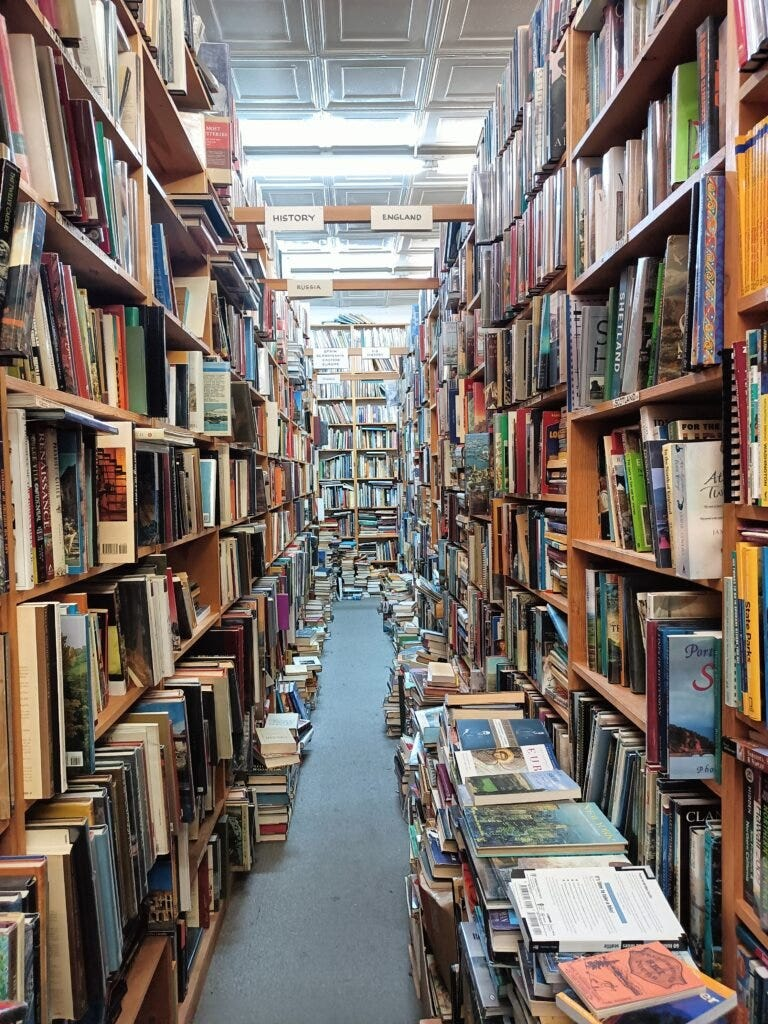
This mirrors, uncomfortably, the disappearance of the physical and social conditions that once made intellectual wandering possible at all. Walter Benjamin’s flâneur – the figure who roams city streets absorbing culture, ideas, and chance encounters – depended on an urban fabric that allowed for slowness, permeability, and unscripted exchange. Cafés near UC Berkeley once functioned this way: you overheard conversations about theory, politics, or art; sometimes you joined in; sometimes a single remark sent you down rabbit holes. A conversation about quantum mechanics might lead to a comic book touching on chaos theory and mythology, then to a used book on Jungian psychology at Moe’s Books, then to a European New Wave film at the U.C. Theatre. These experiences formed a chain – thinking unfolded across bodies, books, streets, and time.
Now that chain has been broken. Cafés became laptop farms, bookstores vanished or relocated to areas with less foot traffic, movie theaters became unaffordable or inaccessible. Online spaces, meanwhile, atomize experience into monetized fragments, interrupted by ads, paywalls, and notifications. Add to all this the inflated cost of American cafés – spaces where lingering without purchase is discouraged and conversation with strangers feels socially and economically improbable; the experience of a flâneur has been rendered structurally impossible.
What I’m grieving, ultimately, isn’t nostalgia or youth. It’s the loss of the environments – both digital and physical – that once made deep, meandering, non-instrumental thinking possible, and with them the quiet disappearance of the flâneur as a way of being in the world.
Notes:
If this piece resonated with you and you’d like to explore related work, here are a few places where I’m continuing these conversations:
💡 On Patreon, I share additional writing, behind-the-scenes notes, and works-in-progress that don’t always fit here. You can find it here.
📖 I also self-published my MA thesis on Butoh, which looks at performance, embodiment, and cultural history. If those threads interest you, it’s available here.
💸 And if a smaller, one-time gesture feels more your speed, you can leave a $3 tip via Ko-fihere. It’s always appreciated.