Byzantine Treasures Saved From Destruction
Tucked away along a tree-lined promenade in Korçë sits Albania’s National Museum of Medieval Art, home to centuries of Byzantine and post-Byzantine iconography.
During the country’s Communist regime, countless churches were destroyed. Yet thanks to efforts to safeguard this cultural and artistic heritage, authorities were petitioned to salvage and preserve thousands of icons, liturgical items, manuscripts, and wood carvings. The collection first opened to the public as a museum in 1980, remaining under national control even as religious institutions across the country continued to be torn down. Following the fall of the regime in 1991, the museum became fully accessible to visitors. In 2016, the holdings were moved to a newly reconstructed, purpose-designed modern building, where they are displayed today.
Approaching the modern building, which is surrounded by a small treed park, you pass through a plaza and fountain where older residents gather to relax and enjoy the outdoors.
Inside, a complimentary audio app guides visitors through all the exhibits and holdings. The exhibition begins with a short, dimly lit hallway displaying silver relics and statues of the Virgin Mary, then opens onto a grand two-level gallery known as the Golden Hall — its walls covered floor to ceiling with wooden painted medieval icons depicting Jesus, Mary, saints, and other biblical figures.
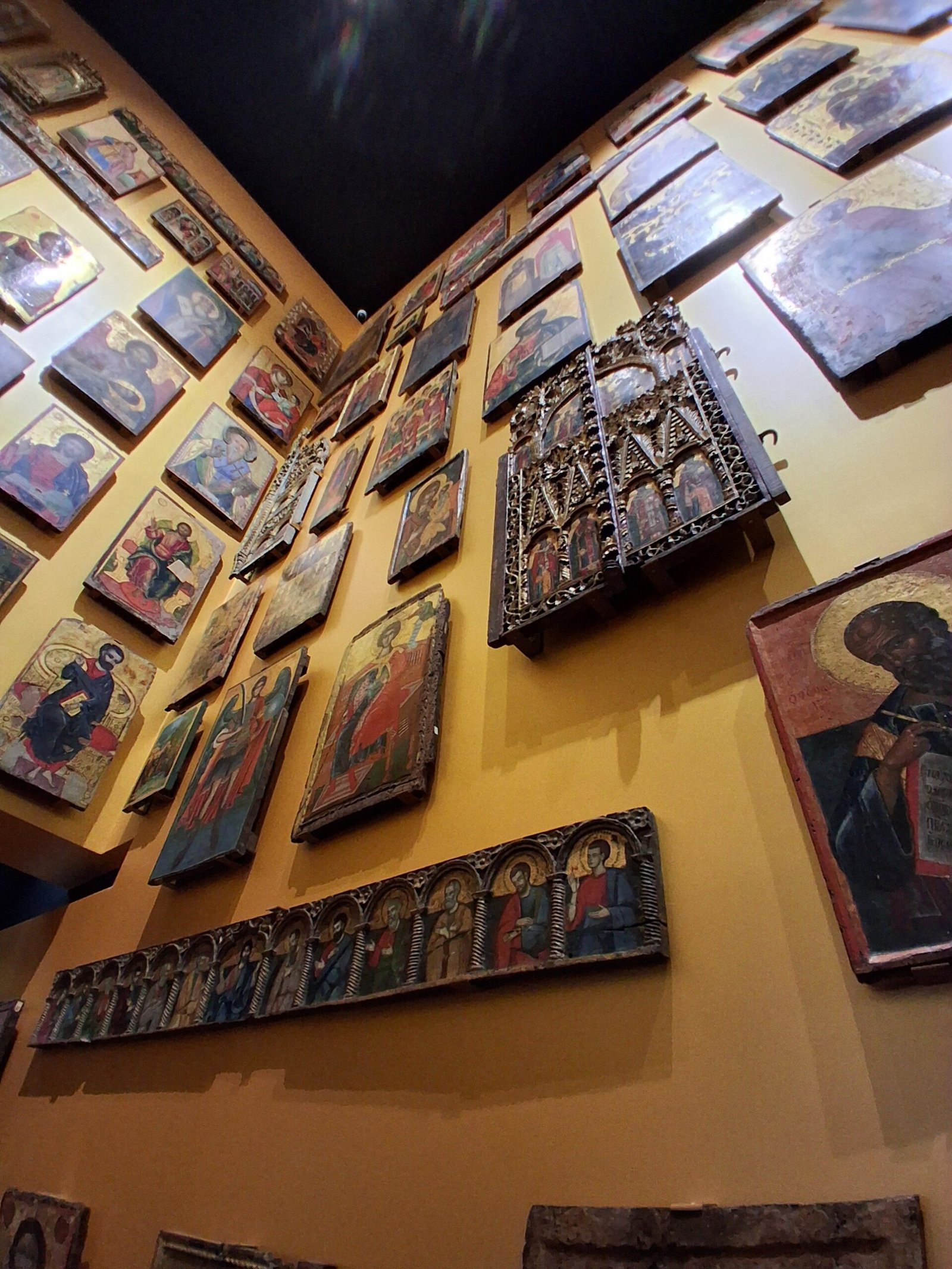
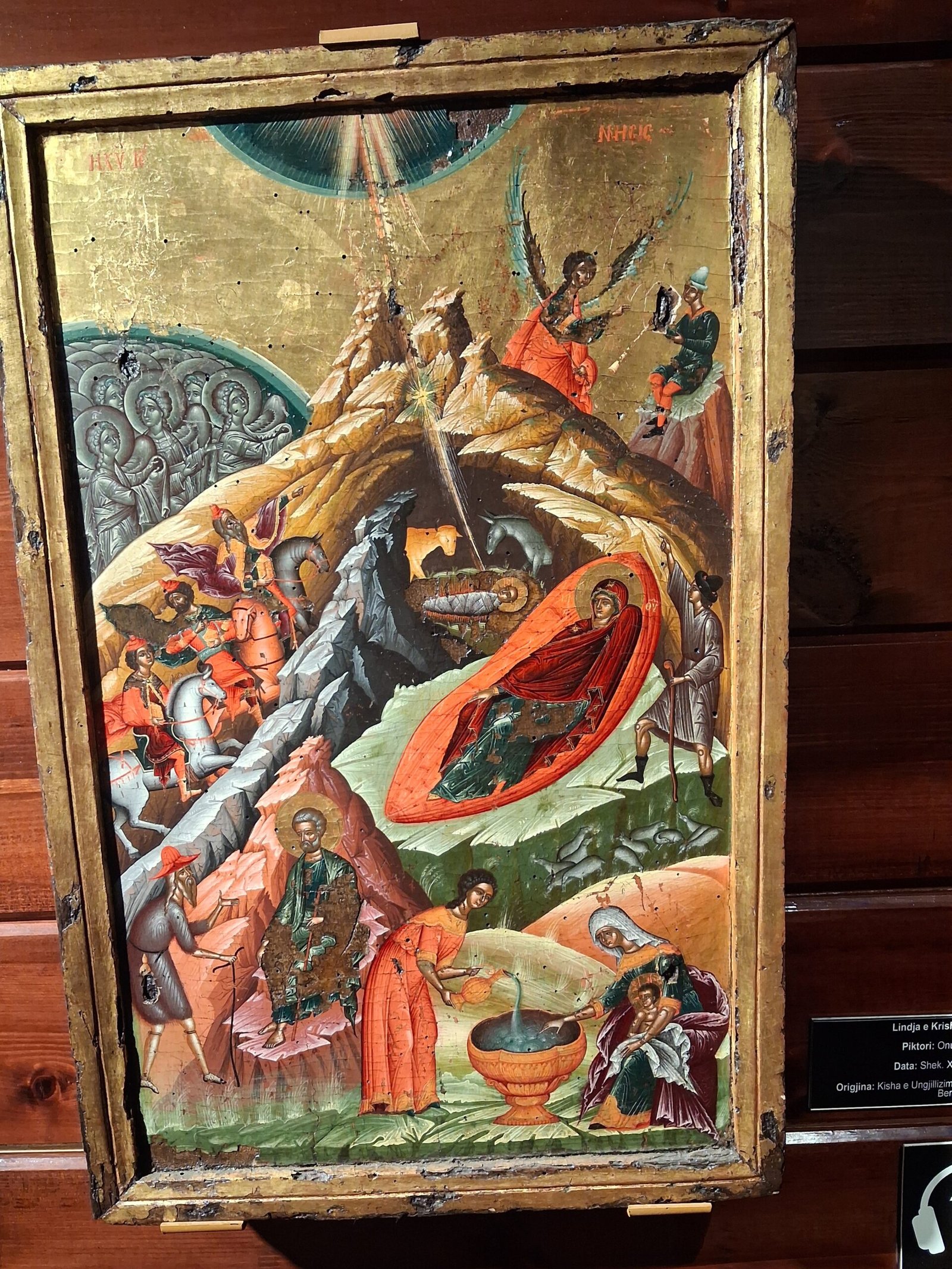
A large wooden staircase runs through the Golden Hall, letting visitors take in the collection as they ascend to the second floor. Beyond it, separate smaller galleries showcase biblical passages and the work of artists from the 14th through the 19th centuries. The museum holds many anonymous works alongside pieces by renowned figures such as the monk Kostandin, Jeromak Shpataraku, Onufri, Onufër Qiprioti, David Selenica, and the Zografi Brothers. On this level you will find the White Balcony, the Black Labyrinth, the White Hall, the Brown Hallway, and — most striking of all — the Red Hall.
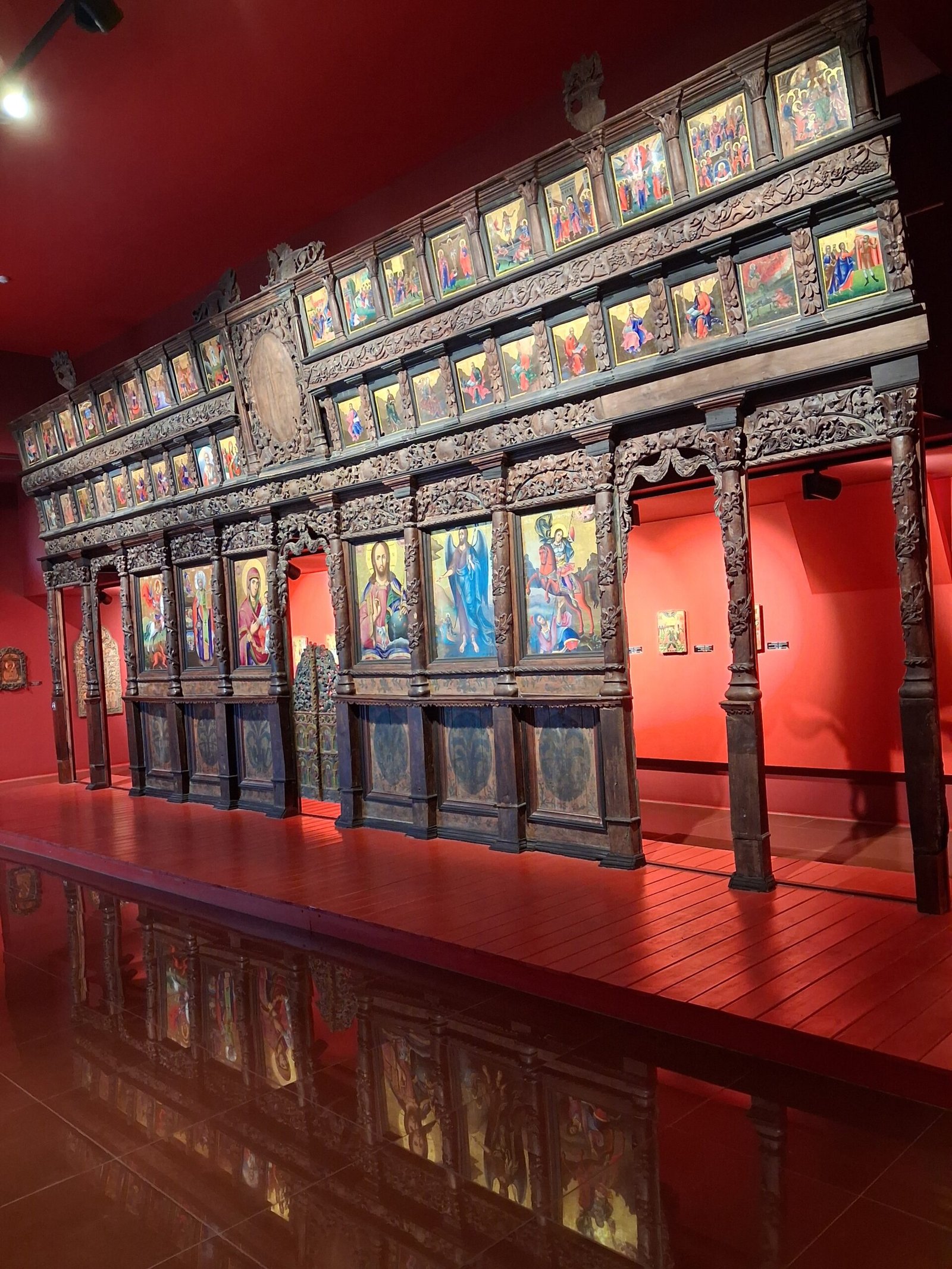
The Red Hall is a large space painted in deep red, housing a monumental black walnut iconostasis from the early 14th century, originally from the Church of St. Nicholas in the village of Rehova. Stepping into this room is an experience in itself. The works shown here belong to a period known as the post-Byzantine renaissance in Albania, featuring icons by the monk Kostandin and Jeromak Spatarak of Elbasan, among others.
Though architecturally modern, the museum building uses color, windows, and lighting to evoke the atmosphere of a medieval space. One could easily spend hours with each piece — whether coming from an art-historical or spiritual perspective, or simply as a curious visitor — marveling at how the medieval treatment of the human figure, with its dramatic angles and sharp lines, feels almost contemporary next to the realistic aims of the Renaissance.
Getting there and planning your visit
The museum sits at Bulevardi Fan Noli 59 in Korçë, surrounded by a small park and close to nearby tavernas and restaurants, where you can settle in for a relaxed lunch afterwards. Allow at least 45 to 60 minutes to see the collection properly. Photography rules can differ from one exhibition to another, so it is worth checking on arrival.
The museum lies within Korçë’s urban area, easy to reach on foot or by car — around five minutes from the city center, or a short stroll. Tirana is roughly 170 kilometres away via the national road network, Pogradec about 40 kilometres, and the Greek border crossings connect through regional roads serving southeastern Albania.
Public transport, taxis, hotels, restaurants, and other visitor services are all close at hand. The museum’s proximity to the city center, cafés, and other cultural landmarks also makes it convenient to pair with a visit to the Old Bazaar before or after.